Publish with us
How a book gets made here.
Cordis House publishes a small number of books each year, all of them edited by its founder, Ron Smith. This page sets out what the house publishes, what it does not, and every phase a book goes through before it reaches a reader.
What we learned the hard way
None of this is secret. It is just nobody’s job to tell you.
The free ISBN is not free. If you take the identifier the retailer hands you, the retailer owns it. Your book lists as “Independently published”, and you cannot carry that ISBN to another printer or distributor later. You buy your own, or you rent your book’s name.
One ISBN per format, and an ISBN can sit in only one global distribution program at a time. Hardcover, paperback, and ebook are three identifiers, and the choice of where each one is enrolled is close to permanent in practice.
Page counts rule out printers. One major hardcover program has a 75-page minimum. A picture book is 32, 40, or 48 pages. You can find that out before you lay the book out, or after. We found out after.
You do not get the customer. When a reader buys your book from a retailer, that reader belongs to the retailer. You get a royalty line on a report. No name, no email, no way to tell that person the next book exists. That single fact shapes everything about how a small press should be built.
Bookstores need two settings most authors never see. Wholesale discount and returnable. If those are wrong, a store physically cannot order your book, and nothing in the interface tells you that is why.
It costs less than you think. Outside of illustration, the production side of our first book ran a couple hundred dollars. The expensive part was never money. It was the months spent making decisions in the wrong order.
Cordis House publishes a small number of books each year. Not because we are precious about it, but because we would rather bring a few meaningful things into the world than a lot of forgettable ones. That is true of the books we write ourselves and the ones we do not.
What we build around a book
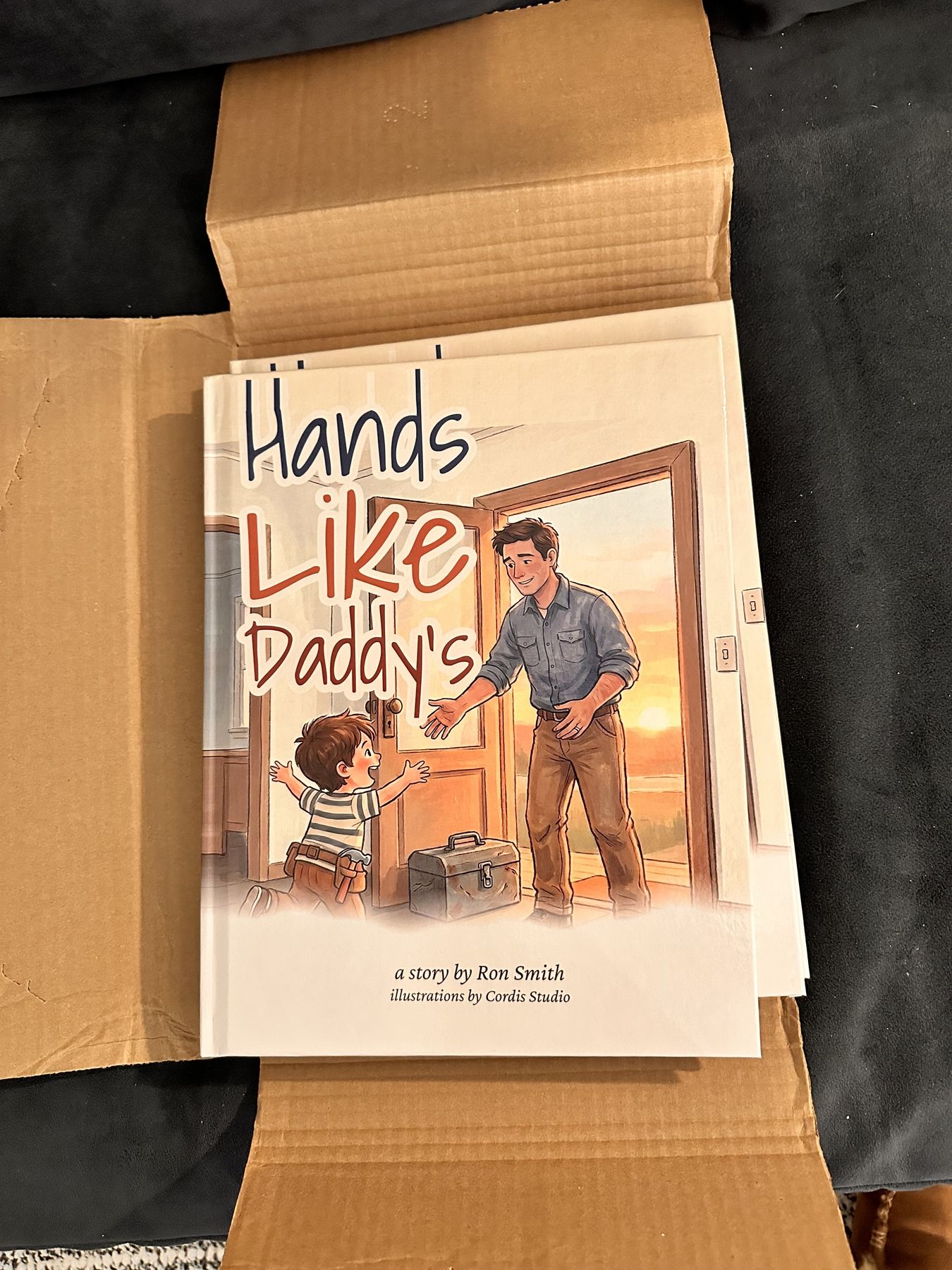
A book is the center of the work, not the whole of it. For Hands Like Daddy’s we wrote and recorded a song, shot a music video, built activity material for classrooms and families, and designed the pages that let a kid keep going after the last spread.
None of that is the book. All of it is how the book finds people.
That is the part most authors are left to figure out alone, and it is the part we are built to do.
The lists
What the house publishes.
Cordis Studio
Picture books
Picture books for the children of trade-business families. First title: Hands Like Daddy’s.
Cordis Studio →
Cordis Press
Business books
Books for owners of founder-led businesses who are not selling, or not selling yet. First title: Buyer-Ready, Book One of The Off-Market Method.
Cordis Press →
Cordis Music
Songs for the books
Original songs that accompany the house’s books. First release: Hands Like Daddy’s, released Father’s Day 2026.
Cordis Music →
Cordis Audio, the spoken-word imprint, is announced for 2027, with an audiobook of Buyer-Ready and a read-along of Hands Like Daddy’s in preparation.
And what it does not
What the house does not publish.
Books outside the lists above. No adult fiction, no poetry, nothing that does not belong on one of the three lists.
Books paid for by their authors. Authors are not charged to be published under a Cordis imprint. Production work for books published elsewhere is a separate offer, described on the services page.
Books rushed to meet a season. A book goes out when it is ready.
The method, in the open
Nine phases, in order.
Every book on the list goes through the same nine phases. They are published here so an author can see exactly what happens to a book, and so a reader can see why it looks the way it does.
Phase 01
Decide what the book is
Before a word is written: who the book is for, what it has to do for them, and which list it belongs on. For Hands Like Daddy’s the answer was a picture book for the children of trade-business families, ages four to eight.
Phase 02
Write it
The author writes the book. The founder edits every title on the list, line by line, until each page does one job and the whole book does the one thing it was for.
Phase 03
Art direction
For illustrated books, references are gathered first, then the characters and the style are locked before a single spread is drawn. Hands Like Daddy’s runs to 14 spreads, illustrated by Cordis Studio.
Phase 04
Build the file
Interior and cover are built to the trim and the format: 48 full-color pages at 8.5 by 11 inches for the picture book, 300 pages at six by nine inches for Buyer-Ready.
Phase 05
Make it legal and real
An ISBN for every format, the copyright page, the metadata retailers read and, where it applies, a Library of Congress Control Number. Hands Like Daddy’s carries LCCN 2026945199.
Phase 06
Pick the printing rails
Each format goes where its readers buy. Hands Like Daddy’s is available to order from booksellers and libraries worldwide. Buyer-Ready is sold on Amazon and direct.
Phase 07
Proof it
Physical proofs are ordered, read and photographed. A book meant to be handled is checked in the hand, not on a screen.
Phase 08
Build demand before printing
Readers hear about a book from the house first, through The Cordis Letters, before it is on sale. Orders for Hands Like Daddy’s opened with a letter.
Phase 09
Launch and sell
Publication day is planned, not hoped for. The Hands Like Daddy’s hardcover was published June 15, 2026, and its companion song from Cordis Music followed on Father’s Day.
Outside authors
Working with outside authors.
So far every title on the list is written by the founder, or made by Cordis Studio from his books. There is no roster of outside authors, and this page will not imply one.
The house works with outside authors rarely, and only when the fit is exact: a book that belongs on one of the lists, by an author who wants it made this way, all nine phases included. If that changes, this page will say so.
Every step, with the receipts
We wrote down how we made the first one, in order, with the actual artifact from each step: the title page, the Founding Reader certificate, the boxes, the doorsteps, the reviews.
Art direction
A cover is a decision, not a template.
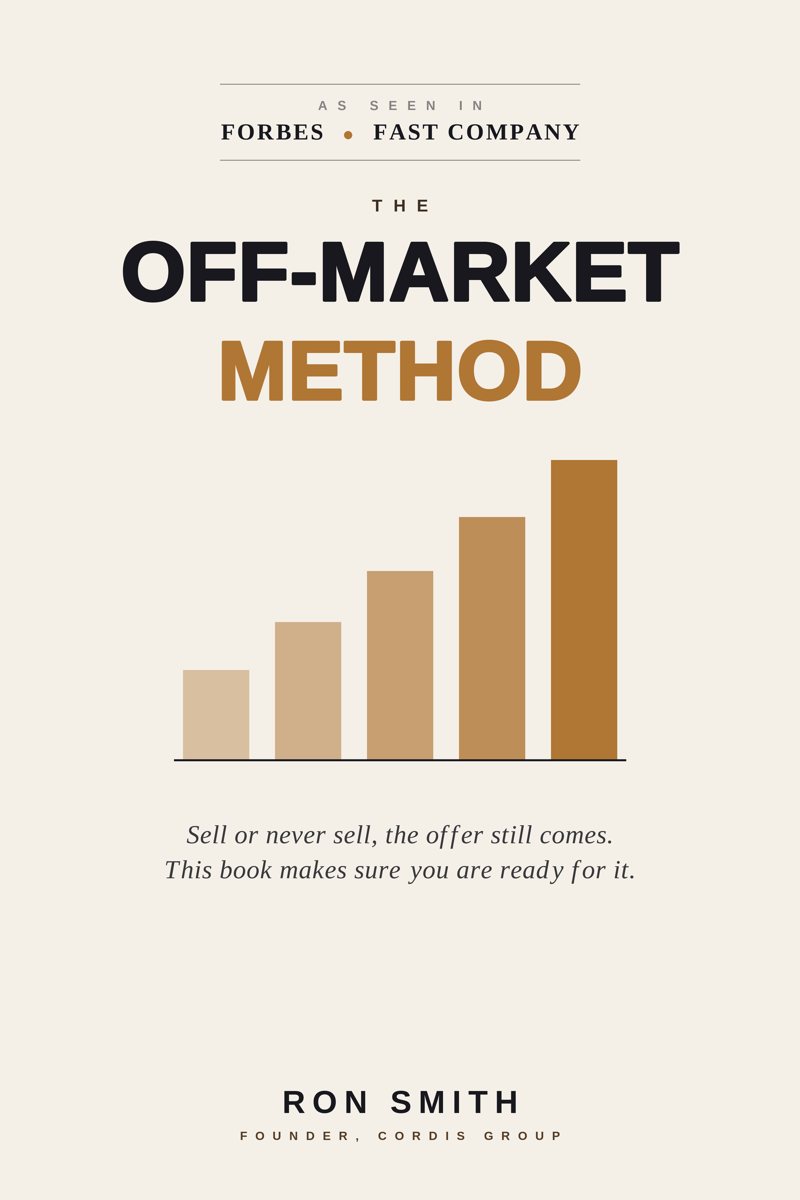
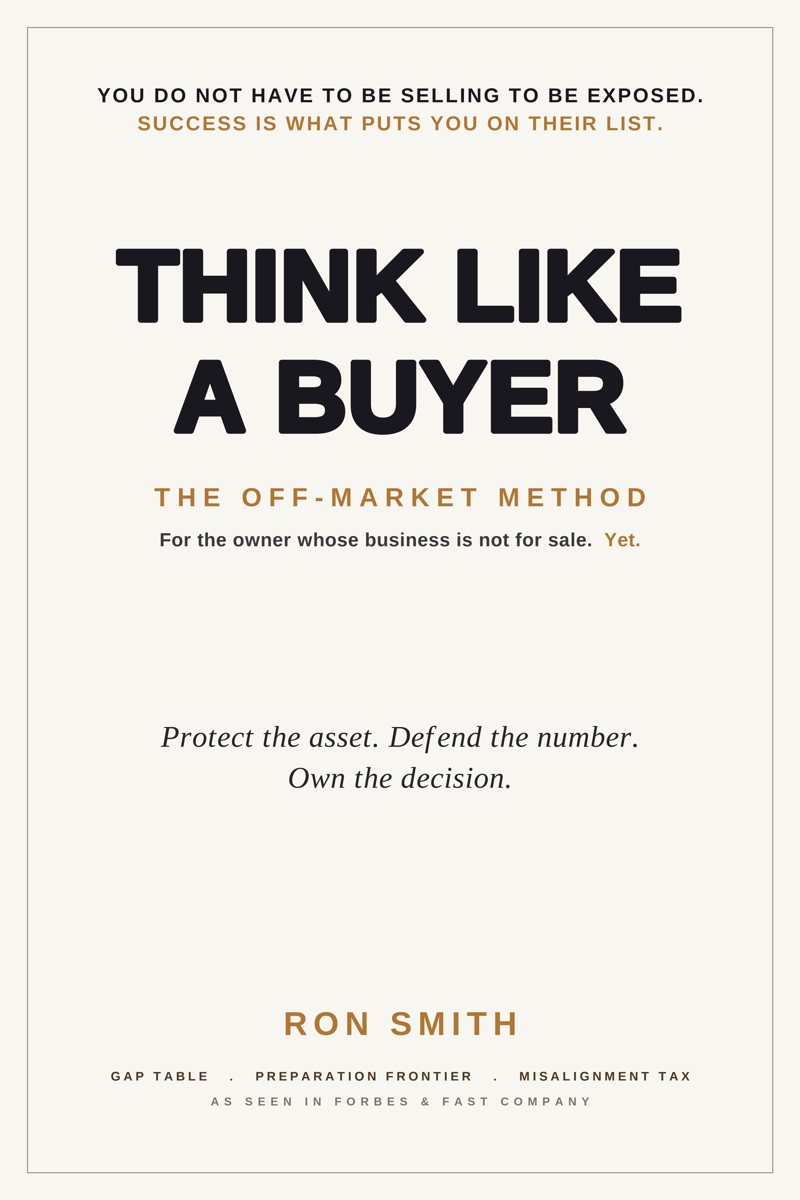
Buyer-Ready went through three complete cover routes before one was chosen. Not three colorways of one idea. Three different arguments about what the book is and who it is for, each built far enough to be judged against the other two.
The one that shipped is the quietest of the three. That is usually how it goes, and it is not a call an author should be making alone at midnight inside a template.

After publication
What the house carries for you.
A book that is finished and not reachable is not published. These are the rails the house already runs, for every title on the list.
Identity
Your own ISBN
One per format, owned by the house, not borrowed from a retailer. Plus the copyright page, the metadata retailers read, and a Library of Congress Control Number where it applies.
Reach
Booksellers and libraries
Titles are listed in the catalogues booksellers and libraries order from, worldwide, and printed to order in territory. No warehouse, no print run to gamble on.
Retail
The product page, built
Description, keywords, categories and the A+ content modules below the fold, written and built by the house rather than left at defaults.
Proof
Printed before it lists
Physical proofs are ordered, read and photographed before anything goes on sale. A book meant to be handled is judged in the hand.
Audience
Readers before launch
Every title is announced to the house list first, in a letter, before it is on sale anywhere. The first edition of the first title was funded that way.
Afterlife
What the book becomes
Songs, recordings, classroom material, companion editions. Four imprints exist so a book is not limited to the format it started in.
Every step of this is documented, in order, with the artifact from each one, on the build.
Submit a manuscript
We read everything that comes in, and we answer either way. We publish a small number of books a year, so most answers are no even when the book is good.
The questions below are long on purpose. If you can answer them, we can probably help you.
We read everything.
We answer either way, usually within two weeks.
We publish a small number of books a year.